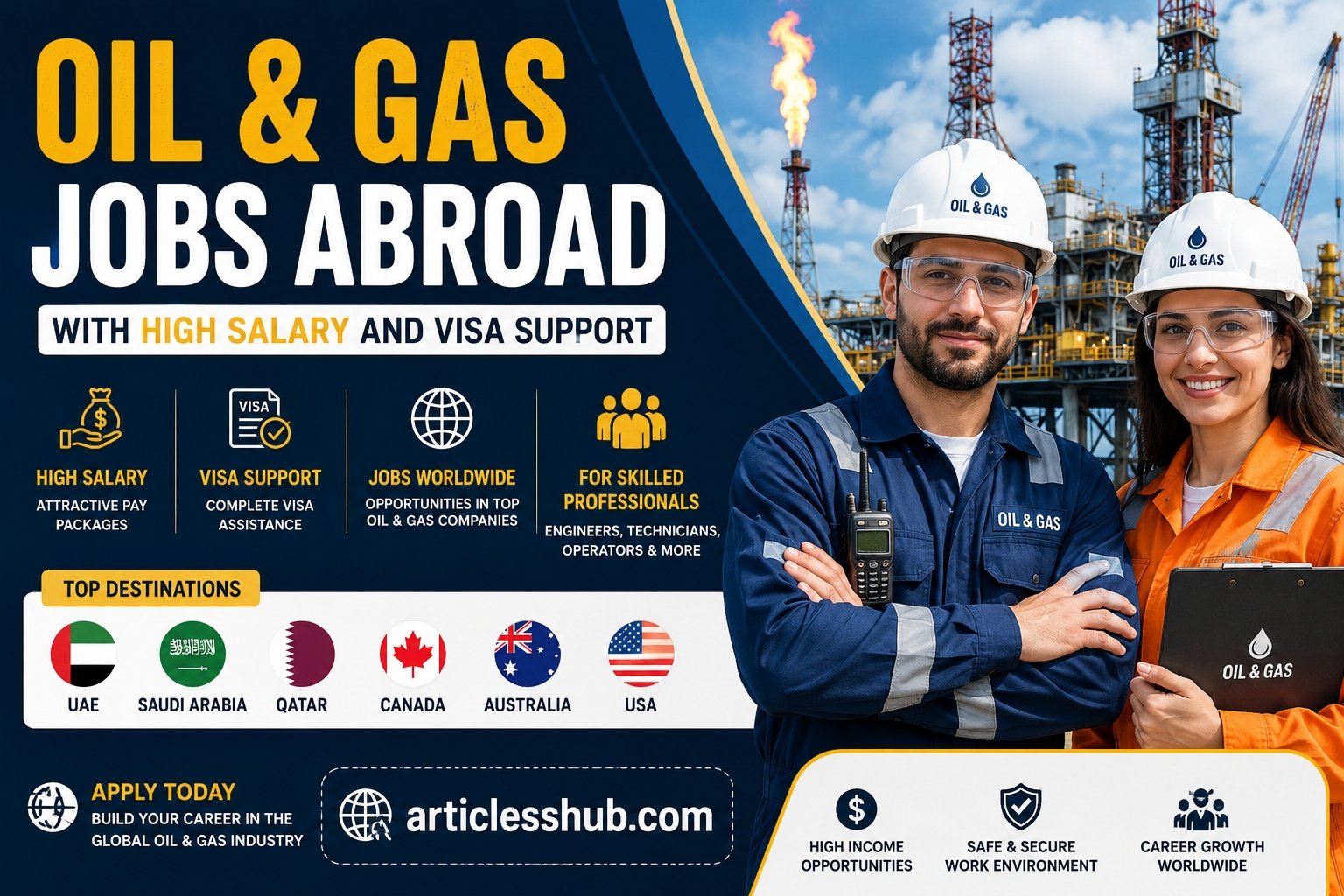
The oil and gas industry offers excellent opportunities for skilled workers and experienced professionals who want to build a career abroad. International employers recruit petroleum engineers, drilling specialists, welders, pipefitters, electricians, mechanics, HSE officers, technicians, and project managers for onshore and offshore projects.
Many international oilfield employers and contractors provide work-permit or visa support when they recruit qualified foreign workers. Sponsorship is generally more common for candidates with in-demand technical skills and relevant experience.
Why Choose Oil and Gas Jobs Abroad?
Oil and gas careers can offer attractive salaries along with benefits such as accommodation, transportation, medical insurance, air tickets, overtime, and rotational work schedules. Benefits depend on the employer, country, position, and employment contract.
Offshore and specialist positions can be particularly competitive because they often require additional safety training, medical clearance, and technical certifications.
Popular Oil and Gas Jobs for Foreign Workers
Some common international positions include:
- Petroleum Engineer
- Drilling Engineer
- Mechanical Engineer
- Electrical Engineer
- Instrumentation Technician
- Pipeline Engineer
- HSE Officer
- Welder and Fabricator
- Pipefitter
- Rig Technician
- Maintenance Technician
- Drilling Supervisor
- Geologist
- Project Manager
- Construction Supervisor
Skilled trades can also provide opportunities for foreign workers, particularly when employers need workers with recognized qualifications and practical experience.
Top Countries for Oil and Gas Careers
Saudi Arabia
Saudi Arabia has a large energy industry and regularly recruits international professionals and skilled workers for oil, gas, refining, construction, and maintenance projects. Employer-sponsored employment visas are commonly used for foreign workers.
United Arab Emirates
The UAE, particularly Abu Dhabi, has a major oil and gas industry. Opportunities can include engineering, offshore construction, maintenance, drilling, welding, HSE, and technical positions.
Qatar
Qatar is an important destination for international energy workers, especially in natural gas and LNG-related projects. Engineers, technicians, supervisors, and skilled tradespeople may find opportunities through energy companies and contractors.
Kuwait
Kuwait’s petroleum industry creates demand for engineers, technicians, maintenance workers, drilling specialists, and other energy-sector professionals.
Oman
Oman has opportunities in exploration, production, drilling, maintenance, and oilfield services. Experienced technical workers can find positions through local employers and international contractors.
Canada
Canada has significant energy activity, particularly in Alberta and other producing regions. Engineering, technical, maintenance, and field positions can be available, although immigration and work-permit requirements vary by job and employer.
United States
The United States has a large petroleum industry, including oilfield operations, refining, engineering, and offshore work. Foreign applicants need an appropriate employment-based immigration route, and sponsorship depends on the employer and position.
Norway
Norway’s offshore energy industry provides opportunities for experienced engineers, technicians, marine workers, and other specialists. Offshore positions generally require appropriate safety and medical qualifications.
Salary Potential
Oil and gas salaries vary significantly according to experience, technical specialization, location, employer, and whether the position is onshore or offshore. Senior petroleum, engineering, management, and specialist positions can command substantially higher compensation than entry-level roles.
Candidates should always check the actual salary stated in the employment contract instead of relying on general online salary estimates.
Requirements for Oil and Gas Jobs Abroad
Typical requirements may include:
- Relevant degree, diploma, apprenticeship, or trade qualification
- Previous oil and gas experience
- Valid passport
- Technical certificates or licenses
- Safety certifications
- Medical fitness certificate
- Police clearance where required
- Good English or another required working language
- References and employment records
For offshore positions, additional qualifications such as BOSIET/HUET, offshore medical certification, H2S training, or role-specific competency certificates may be required.
How Visa Sponsorship Works
Visa sponsorship normally begins after an employer selects a foreign candidate. The employer or its authorized immigration/recruitment team then handles the applicable work-permit process.
A typical process is:
- Search for suitable oil and gas vacancies.
- Prepare an international CV.
- Apply directly to the employer or a verified recruitment agency.
- Complete interviews or trade tests.
- Receive an employment offer.
- Submit documents for work-permit processing.
- Complete medical and other required checks.
- Receive the relevant visa or work authorization.
- Complete travel and employment onboarding.
In the Middle East, employers commonly handle the employment visa/work-permit process after hiring, although exact procedures differ by country.
Tips for Finding Legitimate Jobs
Foreign applicants should be careful when dealing with overseas recruitment. Verify the employer, recruitment agency, job offer, salary, contract, and visa arrangements before paying any money.
A genuine offer should clearly identify the employer, position, salary, working conditions, location, and visa arrangements. Be especially cautious of anyone promising a guaranteed oilfield job or visa in exchange for a large upfront payment.
For applicants from Pakistan, using a properly licensed overseas employment promoter and checking official employment documentation can provide additional protection.
Final Thoughts
Oil and gas jobs abroad can provide strong career opportunities for qualified engineers, technicians, supervisors, and skilled tradespeople. Countries such as Saudi Arabia, UAE, Qatar, Kuwait, Oman, Canada, the United States, and Norway offer different opportunities across the energy sector.
The best way to improve your chances of receiving visa support is to build relevant experience, maintain recognized certifications, prepare a professional CV, and apply for positions where the employer specifically states that international applicants or work-permit sponsorship are accepted.