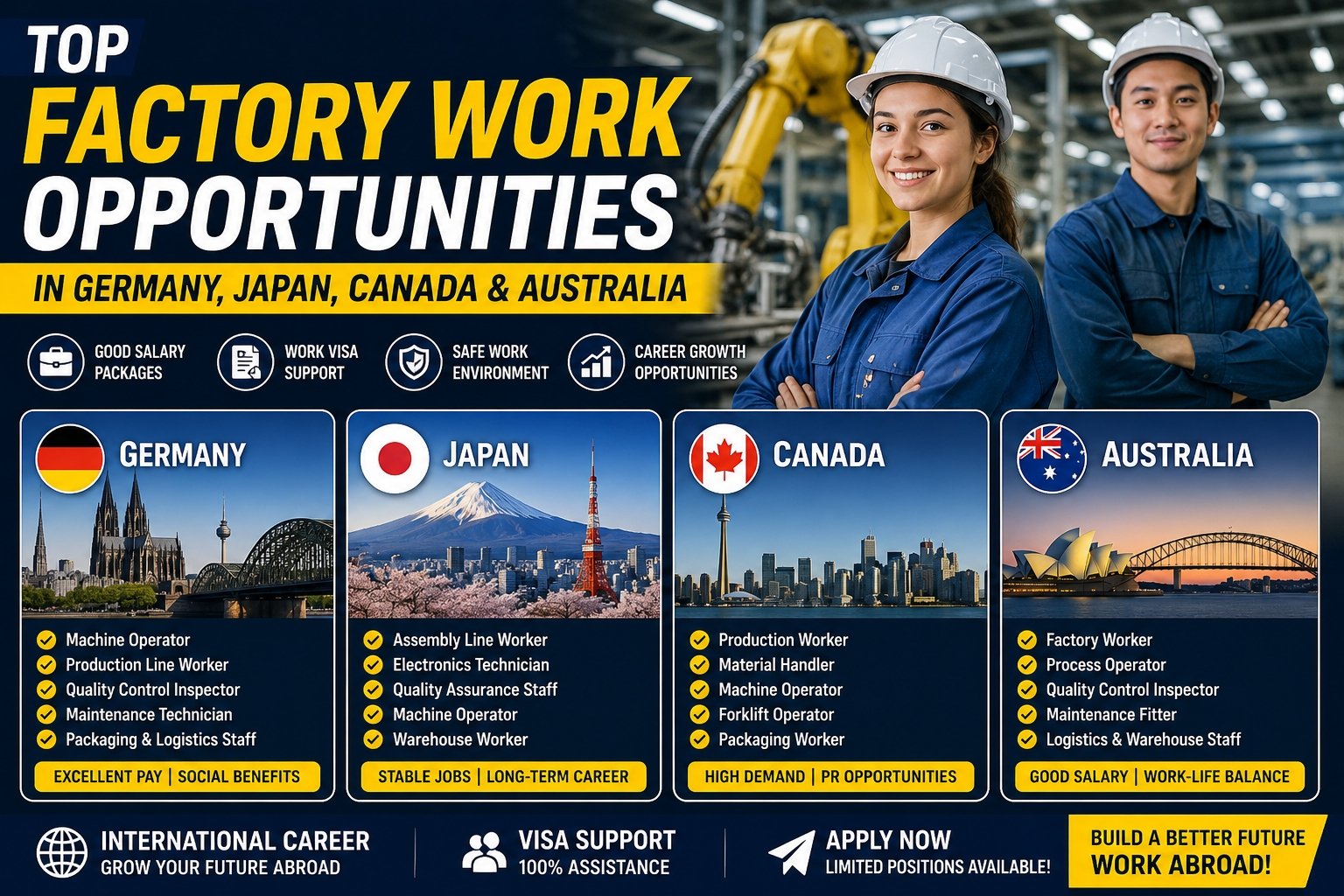
Factory and manufacturing jobs continue to attract workers who want to build a career overseas. Many companies need people for production lines, machine operation, packaging, assembly, food processing, maintenance, and other industrial tasks.
Germany, Japan, Canada, and Australia are among the countries where manufacturing workers may find different types of employment. The right opportunity depends on your experience, technical skills, language ability, and work authorization.
Factory Jobs in Germany
Germany is well known for its manufacturing and engineering industries. The country has factories connected with automobiles, machinery, electronics, chemicals, food production, and industrial equipment.
Foreign workers may find positions such as:
- Production worker
- Assembly operator
- Machine operator
- CNC worker
- Welder
- Packaging worker
- Quality checker
- Maintenance technician
- Warehouse production worker
Workers with technical training and industrial experience may have more options than applicants without previous experience. Knowing German can also make it easier to communicate with supervisors and understand workplace safety instructions.
Manufacturing Jobs in Japan
Japan has a strong manufacturing sector and regularly employs workers in areas such as electronics, machinery, metal products, food manufacturing, and assembly.
Depending on the position and immigration route, available work can include:
- Factory production
- Machine operation
- Electronics assembly
- Metal processing
- Food manufacturing
- Sewing and textile work
- Packaging
- Equipment-related work
Japan’s Specified Skilled Worker system includes an industrial product manufacturing field. Applicants should check the current official requirements before applying because eligibility varies according to the job and visa category.
Factory Jobs in Canada
Canada’s manufacturing industry covers many different products, including food, machinery, automotive components, furniture, construction materials, and consumer goods.
Possible jobs include:
- Production assistant
- Factory operator
- Machine operator
- Food processing worker
- Packaging worker
- Welder
- CNC operator
- Quality control worker
- Maintenance worker
Some positions are suitable for people with basic production experience, while skilled manufacturing roles can require professional training or previous industrial work.
Foreign nationals generally need appropriate authorization to work in Canada. A job offer alone does not automatically give someone permission to work.
Factory Work in Australia
Australia also has employment opportunities across food manufacturing, metal production, machinery, building products, and other industrial areas.
Workers may find jobs such as:
- Production operator
- Factory hand
- Machine operator
- Food production worker
- Welder
- Fabricator
- Maintenance worker
- Production technician
- Quality assurance worker
Technical workers with practical experience can have an advantage when applying for specialized manufacturing positions.
Basic Requirements for Factory Workers
Requirements are different for every employer. However, international applicants may commonly need:
- A valid passport
- A professional CV
- Previous work experience
- Relevant technical skills
- Required certificates or licenses
- Language ability where applicable
- Good workplace safety knowledge
- A valid work visa or permit
Entry-level jobs may have fewer educational requirements, while technical positions can require formal qualifications and experience.
How to Apply for Factory Jobs Abroad
Finding an overseas factory job becomes easier when you follow a clear process.
1. Select Your Target Country
Decide whether Germany, Japan, Canada, or Australia fits your experience and career goals.
2. Prepare Your CV
Include your previous factory jobs, machine experience, technical skills, education, and certifications.
3. Search for Genuine Employers
Use company career pages and reliable employment sources instead of depending only on social media advertisements.
4. Apply for Suitable Positions
Read the job description carefully and apply when your skills match the employer’s requirements.
5. Complete the Hiring Process
The employer may conduct an interview, practical assessment, or background checks.
6. Check Work Authorization
Before making travel arrangements, confirm which visa or work permit you need and whether you qualify.
Skills That Can Help You Get Hired
Practical skills can make your CV stronger. Useful areas include:
- Machine operation
- Welding
- CNC machinery
- Mechanical work
- Electrical maintenance
- Product assembly
- Quality inspection
- Packaging
- Workplace safety
- Production equipment handling
Learning the local language can also improve communication and workplace performance.
Salary and Benefits
Factory salaries vary significantly between countries, cities, employers, and job types. Skilled operators and technicians can generally earn more than entry-level workers.
Some employers may provide benefits such as:
- Paid holidays
- Overtime pay
- Shift allowances
- Health-related benefits
- Training
- Retirement contributions
- Employee accommodation in some cases
Always check the actual employment contract instead of relying on a salary figure from an online advertisement.
Avoid Fake Overseas Factory Jobs
Job seekers should be especially careful with offers promising guaranteed visas, extremely high salaries, or immediate employment without an interview.
Before paying any recruitment fee, verify the employer and job offer. Never send money simply because someone claims it will guarantee a visa.
Conclusion
Factory work can be an attractive option for people looking for employment opportunities abroad. Germany offers a large industrial and engineering market, Japan has established manufacturing pathways, Canada has a broad manufacturing sector, and Australia provides opportunities across several production industries.
The best job depends on your experience, skills, language ability, qualifications, and legal work eligibility. Research the employer carefully and use official immigration information before accepting an overseas factory position.