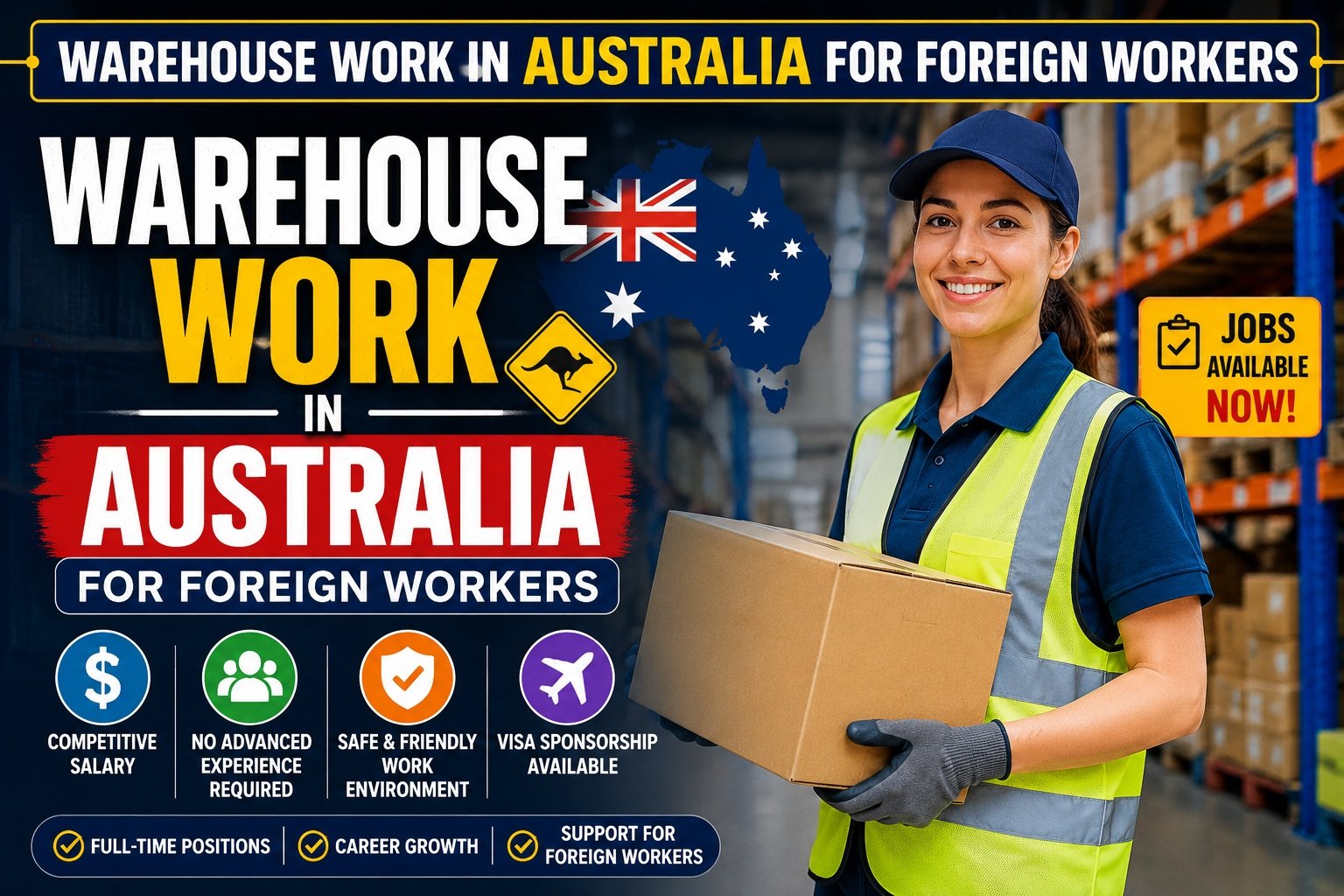
Australia’s warehouse and logistics industry offers employment opportunities across distribution centres, retail warehouses, manufacturing facilities, supermarkets, and e-commerce businesses. For foreign workers, these jobs can be attractive because some positions focus more on practical skills and experience than on university qualifications.
Warehouse employees are commonly involved in receiving goods, checking stock, preparing customer orders, packing products, loading and unloading deliveries, and keeping storage areas organised.
What Does a Warehouse Worker Do?
The daily work depends on the employer and position. A general warehouse worker may be responsible for:
- Receiving and checking incoming products
- Picking items from warehouse shelves
- Packing customer orders
- Labelling and preparing shipments
- Loading and unloading goods
- Moving stock around the warehouse
- Checking inventory
- Keeping the workplace clean and organised
- Following workplace health and safety procedures
Some positions involve physically demanding work, so employers may look for workers who can safely stand, walk, lift and move goods during their shifts.
Popular Warehouse Jobs in Australia
Foreign applicants may come across different job titles when searching for warehouse employment. These include:
Warehouse Assistant: Helps with general warehouse duties such as packing, stock movement and order preparation.
Picker and Packer: Picks products from storage areas and prepares them for delivery.
Storeperson: Handles stock, deliveries, inventory and warehouse organisation.
Forklift Operator: Uses a forklift to move pallets and materials. Appropriate licensing and training may be required.
Dispatch Worker: Prepares completed orders and shipments for collection or delivery.
Inventory Worker: Helps count, record and organise stock.
The experience required can vary significantly between employers. Some entry-level positions provide training, while specialised positions may require previous experience or licences.
Salary and Working Conditions
Warehouse pay in Australia depends on the employer, occupation, location, employment arrangement, experience and applicable workplace award or agreement.
Employees may also receive different rates for particular shifts, overtime or other circumstances where applicable. Rather than relying on a fixed salary figure from a job advertisement, applicants should check the relevant Australian workplace rules and the specific employment offer.
For visa holders, Australian workplace protections still apply. Employers must follow the minimum employment standards that apply to their workers.
Can Foreign Workers Get Warehouse Jobs?
Yes, foreign nationals can work in Australian warehouses if they have a visa that gives them the required work rights.
This is an important point because having a warehouse vacancy does not automatically mean that the employer can sponsor an overseas worker. Visa eligibility depends on the particular visa program, occupation, employer and current Australian immigration rules.
Some people may already have work rights through their existing visa, while others may need to qualify for an appropriate migration pathway.
Skills That Can Help You Get Hired
You can improve your chances by developing practical warehouse skills. Employers may value:
- Previous warehouse experience
- Good communication skills
- Basic computer knowledge
- Inventory-handling experience
- Safe manual-handling practices
- Forklift experience and relevant licensing
- Reliability and punctuality
- Ability to work independently and with a team
- Willingness to work different shifts
English requirements also depend on the employer and position, but being able to understand workplace instructions and safety information is particularly important.
How Foreign Workers Can Apply
Start by preparing a clear CV that explains your previous employment and practical skills. If you have worked in warehouses, factories, logistics companies or distribution centres in another country, include those details.
Next, search for genuine Australian vacancies through established job platforms, recruitment companies and company career pages. Read each advertisement carefully, especially the section describing visa or work-right requirements.
If an employer contacts you, verify the company and understand exactly what type of employment and visa arrangement is being offered.
Be Careful With Visa Sponsorship Claims
Foreign workers should be particularly careful with advertisements that promise “guaranteed visa sponsorship” or ask applicants for large payments before providing a job.
A warehouse vacancy by itself does not guarantee visa sponsorship. Always check the current requirements through Australia’s official immigration information before paying an agent or making travel arrangements.
Final Thoughts
Warehouse work can be a practical employment option for people interested in Australia’s logistics and distribution industry. There are different roles, from general warehouse assistants and pickers to forklift operators and inventory positions.
For overseas applicants, the key is to find a genuine job, understand the employer’s requirements, and make sure your visa gives you the legal right to work. Building relevant experience, preparing a professional CV and applying through legitimate channels can make the job search much more effective.
