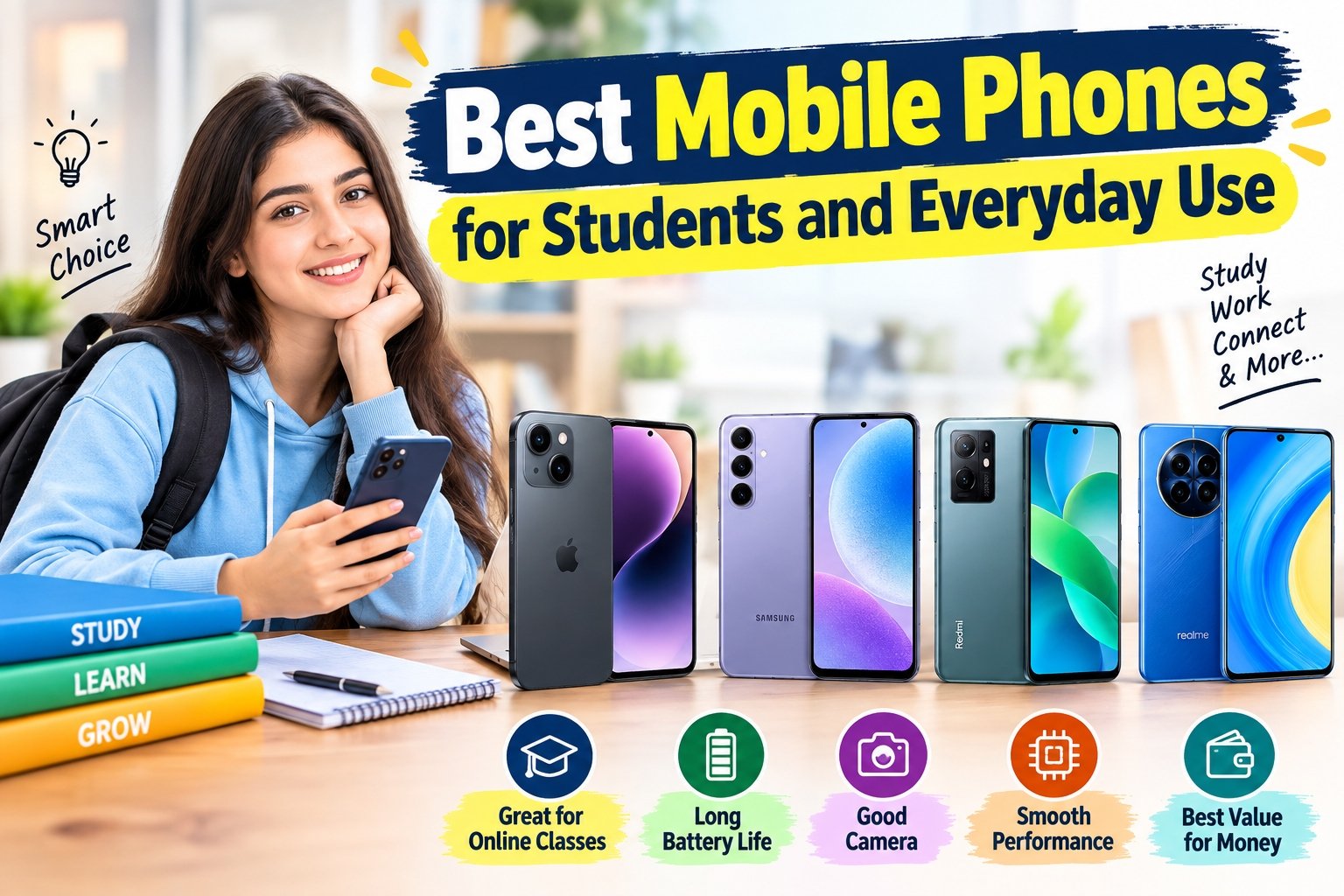
Choosing the right smartphone can be difficult because there are many options available in the market. Students need a phone for study, online classes, communication, social media, entertainment, and daily tasks. At the same time, the phone should have good battery life, smooth performance, enough storage, and a useful camera.
The best mobile phones for students do not always have to be expensive. Many affordable and mid-range phones can provide the features students need for everyday use.
What Should Students Look for in a Mobile Phone?
Before buying a smartphone, students should check a few important features. A good phone should provide a balance between price, performance, battery, camera, and storage.
1. Good Battery Life
Battery life is one of the most important features for students. A phone with a strong battery can last through classes, browsing, video calls, social media, and entertainment.
Look for a phone that can comfortably handle a full day of normal use. Fast charging is also useful when you need to charge the phone quickly.
2. Smooth Performance
Students often use several apps during the day. These may include browsers, messaging apps, video meeting apps, learning platforms, document apps, and social media.
A phone with a good processor and enough RAM can make switching between apps smoother and reduce slowdowns.
3. Enough Storage
Storage is important because students may save photos, videos, documents, assignments, apps, and other files.
For basic use, a phone with 128GB storage can be a practical starting point. Users who store many videos or large files may prefer more storage.
4. Good Display
A clear and bright display makes reading documents, watching educational videos, browsing websites, and attending online classes more comfortable.
A larger display can be useful for studying, while a high-quality screen can make videos and images look better.
5. Camera Quality
Students often use their phones to take photos, scan notes, record videos, and communicate through video calls.
You do not always need a professional camera phone. A reliable main camera and a good front camera can be enough for everyday student needs.
Best Mobile Phones for Students
The best choice depends on your budget and how you use your phone. Instead of choosing a phone only because of its brand, compare its features and price.
Budget Mobile Phones
Budget smartphones are suitable for students who mainly need a phone for calls, messaging, browsing, social media, online learning, and basic photography.
These phones can offer large displays, decent batteries, and enough performance for common apps without a high price.
Before buying a budget phone, check its RAM, storage, processor, software version, battery capacity, and update support.
Mid-Range Mobile Phones
Mid-range phones are a good option for students who want stronger performance without paying flagship prices.
They can be useful for multitasking, photography, gaming, online classes, video editing, and other demanding tasks.
A good mid-range phone can also remain useful for several years if it receives regular software updates.
Premium Mobile Phones
Premium phones are designed for users who want high-end performance, advanced cameras, better displays, and longer software support.
They can be useful for students studying subjects that require powerful applications, photography, video production, programming, or other demanding work.
However, expensive features are not necessary for every student.
Best Phones for Online Classes
Online learning has become an important part of education. Students may use their smartphones for video classes, educational apps, digital books, and communication with teachers.
For online classes, look for:
- A good front camera
- Clear microphone and speakers
- Stable Wi-Fi or mobile connectivity
- Long battery life
- A bright display
- Enough storage
- Smooth performance
A phone that performs these tasks reliably can be more useful than a phone with an expensive camera that you rarely use.
Best Phones for Battery Life
Students may spend many hours away from home, so battery life can be very important.
Heavy users should look for a phone with a large battery and efficient hardware. Fast charging is another useful feature because it can reduce charging time.
Battery performance also depends on screen brightness, network connection, gaming, video streaming, and the apps running in the background.
Best Phones for Photography
Students who enjoy photography and social media may want a phone with a good camera system.
When comparing cameras, do not focus only on megapixels. Image processing, camera sensors, stabilization, low-light performance, and software can also affect photo quality.
A good camera phone should produce clear photos in different lighting conditions and provide a useful front camera for selfies and video calls.
Best Phones for Gaming
Some students also use their phones for mobile gaming. If gaming is important, check the processor, RAM, display refresh rate, battery, and cooling system.
A powerful processor can provide better gaming performance. A high-refresh-rate display can also make supported games feel smoother.
However, gaming can use more battery and produce more heat, so battery capacity and thermal management are also important.
Android vs iPhone for Students
Android and iPhone both have different advantages.
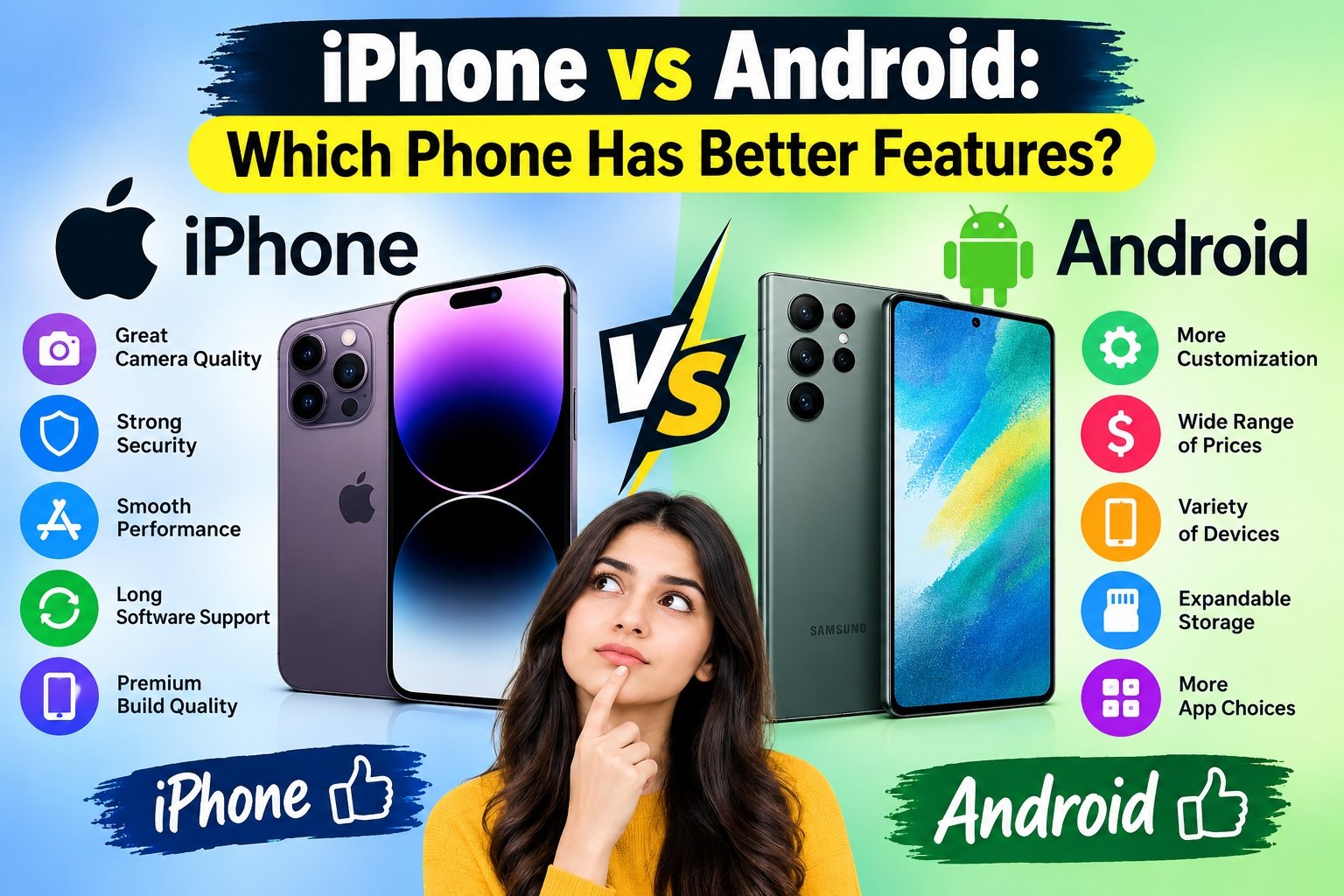
Android phones are available at many different prices and from many manufacturers. Students can choose from budget, mid-range, and premium models. Android also provides many customization options.
iPhones are known for their smooth software experience, strong app ecosystem, camera features, and long-term software support.
The right choice depends on your budget, preferred apps, existing devices, and personal requirements.
How Much Storage Do Students Need?
Storage requirements depend on how you use your phone.
A student who mainly uses messaging, browsing, educational apps, and social media may find 128GB suitable.
Students who download many games, videos, photos, and large documents may benefit from 256GB or more.
It is better to think about your storage needs before buying rather than running out of space later.
How Much RAM Is Enough?
RAM helps a phone handle multiple apps and tasks.
For basic everyday use, moderate RAM can be enough. Students who regularly multitask, play games, or use demanding applications may prefer a phone with more RAM.
However, RAM should not be considered alone. The processor, software optimization, and storage speed also affect overall performance.
Important Features for Everyday Use
A good everyday smartphone should provide:
- Reliable battery life
- Smooth performance
- Good display quality
- Enough storage
- Good network connectivity
- Useful camera quality
- Fast charging
- Security features
- Regular software updates
These features can make a phone more comfortable to use for school, work, entertainment, and communication.
Tips for Buying a Student Phone
Before buying a smartphone, compare several models instead of choosing the first option you see.
Check the official specifications and compare:
- Processor performance
- RAM and storage
- Battery capacity
- Charging speed
- Display quality
- Camera features
- Software updates
- Build quality
- Warranty
- Current price
It is also useful to read reviews and check the phone in person if possible.
Should Students Buy an Expensive Phone?
An expensive phone is not necessary for every student. If your main activities are online classes, messaging, browsing, social media, photography, and entertainment, a good budget or mid-range phone may be enough.
A premium phone can make more sense for users who need advanced cameras, high performance, professional apps, or premium features.
The best approach is to choose a phone based on your actual needs rather than simply buying the most expensive model.
How to Keep Your Phone Working Longer
After buying a phone, proper care can help maintain its performance.
Keep the software updated, avoid installing suspicious apps, protect the phone with a good case, and keep enough free storage available.
Students should also back up important assignments, photos, contacts, and documents so they are not lost if the phone is damaged or replaced.
Final Thoughts
The best mobile phones for students and everyday use are phones that offer a good balance of price, performance, battery life, storage, display, and camera quality.
Budget phones can handle basic student activities, while mid-range models can provide better performance for multitasking and entertainment. Premium phones are suitable for users who need advanced features and powerful hardware.
Before buying a new phone, compare its specifications, software support, warranty, and price. Most importantly, choose a smartphone that matches your daily needs and budget.