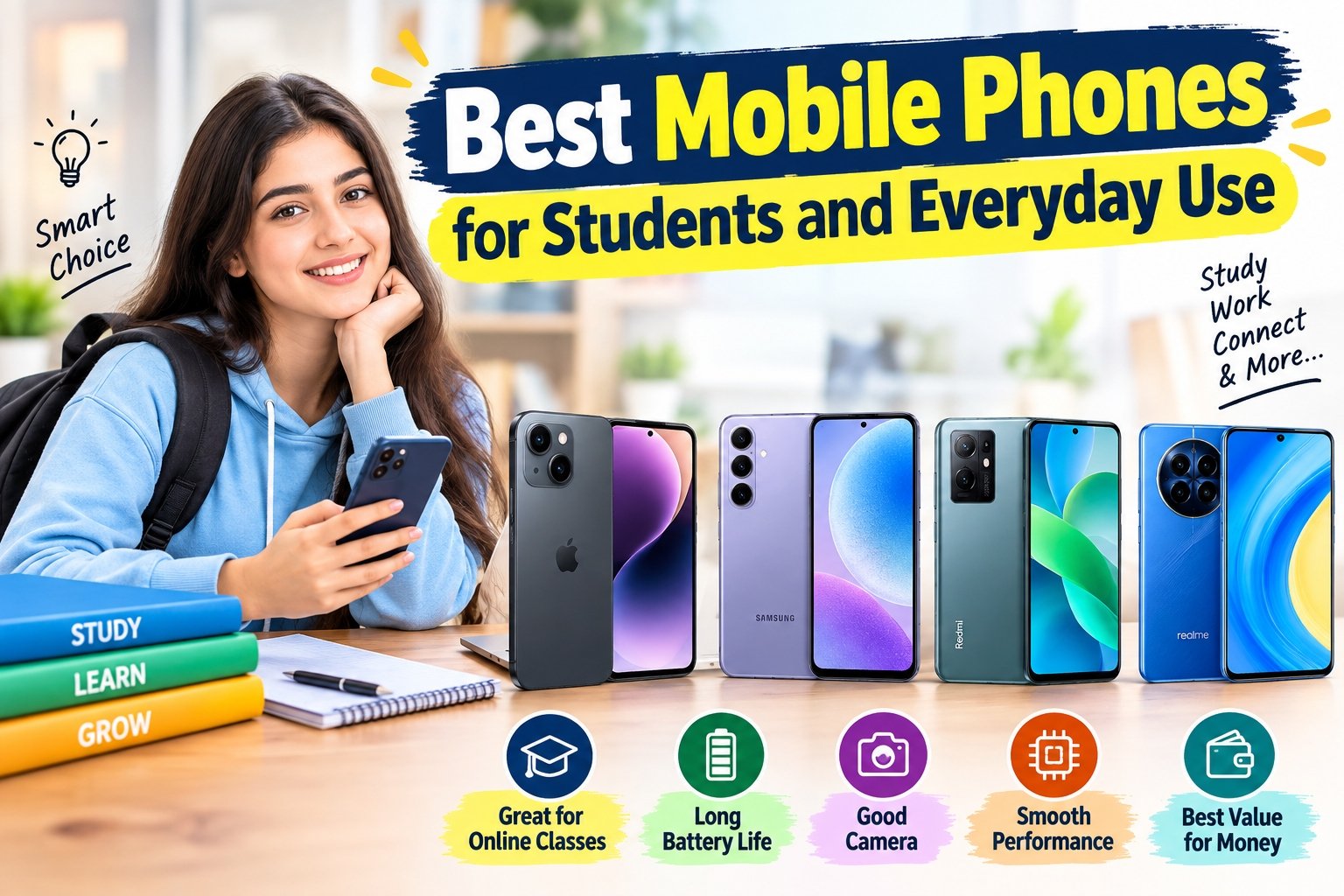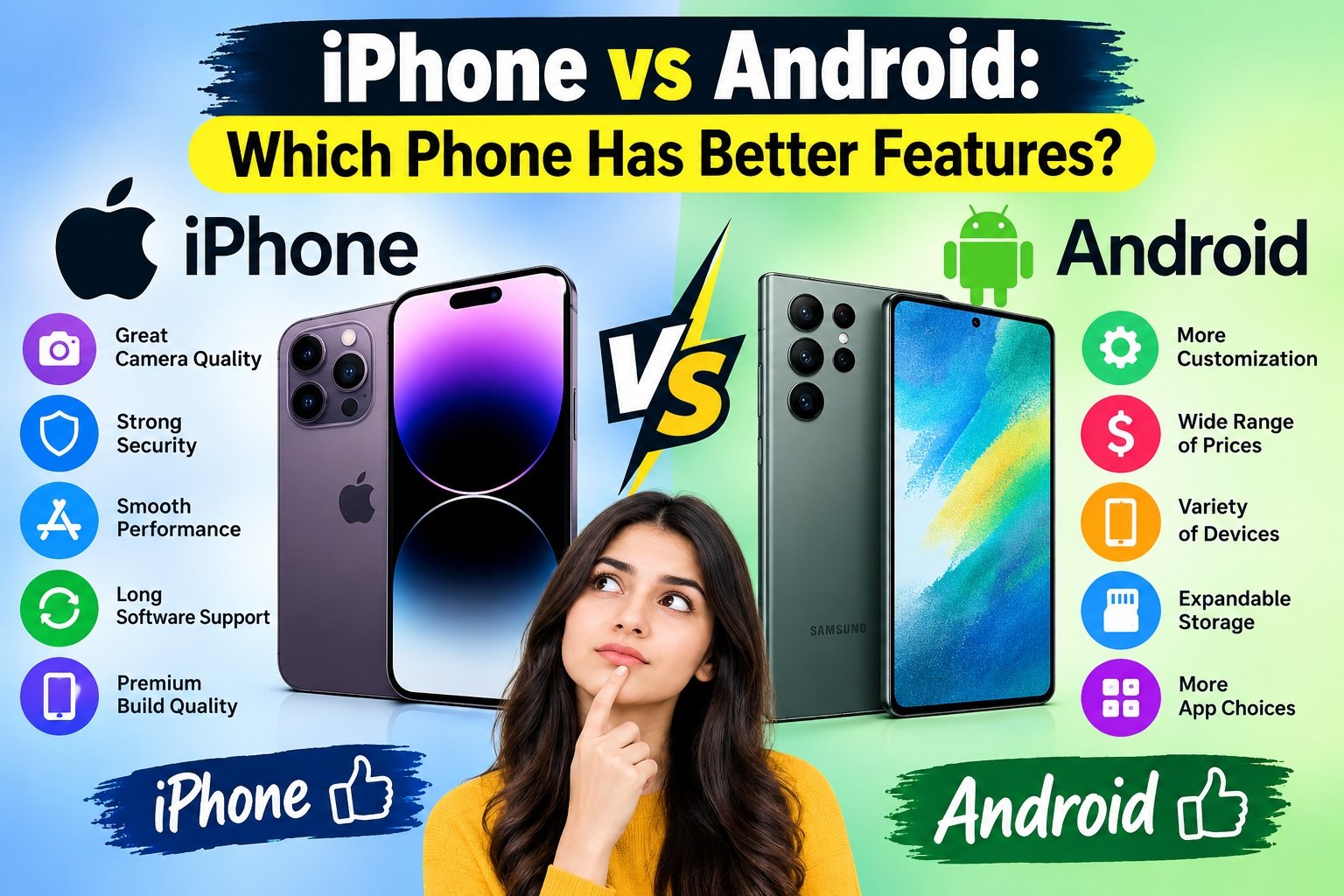
Choosing a new smartphone is not always easy. iPhone and Android phones both offer modern designs, good cameras, fast performance, and smart features. However, they work differently and offer different experiences.
Some people prefer the simple experience of an iPhone, while others like the freedom and variety available with Android phones. In this guide, we compare the main features of both to help you understand the differences.
iPhone Features
iPhones are known for their smooth software and strong connection with other Apple products. If you already use a MacBook, iPad, or Apple Watch, an iPhone can make it easier to connect your devices.
The iPhone also offers powerful processors, high-quality cameras, strong video recording, and regular software updates. Apple’s focus on privacy and security is another reason many users choose iPhone.
Main iPhone Benefits
- Smooth and easy-to-use software
- Powerful processor performance
- High-quality photos and videos
- Strong security features
- Good connection with Apple devices
- Regular software updates
- Useful AI and smart features
Android Phone Features
Android phones give users more choices. Instead of coming from one company, Android devices are made by many brands, including Samsung, Google, Xiaomi, OnePlus, and others.
This means buyers can choose from budget phones to expensive flagship models. Android also provides more freedom to customize the home screen, widgets, apps, and other parts of the phone.
Main Android Benefits
- More customization options
- Many phone brands and models
- Different price ranges
- Large selection of screen sizes
- Advanced camera options
- AI-powered features
- More flexible settings
Camera Comparison
Both iPhone and Android phones can take excellent pictures. iPhones are particularly popular for video recording and consistent camera performance.
Android phones can also offer impressive camera systems. Some premium Android models provide high-resolution cameras, powerful zoom, and advanced photography tools.
The camera experience can therefore depend more on the specific phone model than simply choosing iPhone or Android.
Performance
iPhones use Apple’s own chips, which are designed specifically for iPhone devices. This helps Apple provide strong performance and smooth software integration.
Android performance varies because there are many manufacturers and processors. Premium Android phones can be extremely fast, while affordable models focus more on providing useful features at a lower price.
Customization
This is one of the biggest differences between the two platforms.
Android generally gives users more control over the appearance and behavior of their phones. Users can change widgets, launchers, layouts, and many system settings.
iPhone provides customization too, but Apple’s approach is generally more controlled and consistent.
Battery and Charging
Battery life depends on the particular phone, screen size, processor, software, and how the device is used.
Many Android phones offer fast charging and large batteries. iPhones also provide good battery performance, especially on newer models, although charging technology can differ between models.
Security and Updates
Apple places a strong focus on privacy and security. iPhone software updates are also distributed directly by Apple.
Android security and update support can vary depending on the manufacturer and model. Google and major Android brands have improved update policies significantly, especially for newer premium devices.
Price and Phone Choices
iPhone mainly targets the Apple ecosystem and its devices are generally positioned in the mid-range to premium market.
Android offers a much wider selection. Buyers can find inexpensive smartphones as well as high-end flagship devices with premium cameras, powerful processors, and advanced displays.
iPhone vs Android: Which Is Better?
There is no single answer for everyone. An iPhone may be suitable for users who want a simple experience, strong Apple-device integration, and consistent software. Android may be a better fit for people who want more customization, greater phone variety, and different price options.
Before buying a phone, consider your budget, camera needs, battery requirements, preferred apps, and other devices you already use.
Final Thoughts
Both iPhone and Android have become powerful smartphone platforms. The best choice depends on what features matter most to you. Instead of choosing only by brand, compare the individual phone’s camera, battery, performance, software support, price, and features.
This can help you find a smartphone that matches your everyday needs and budget.